Top Performance Management Software
Performance management software delivers the greatest value when it empowers organizations to build trust, clarify goals, and drive meaningful action—rather than simply digitizing traditional review cycles. The most effective solutions go beyond automating HR processes; they create a dynamic environment where feedback, evidence, and decisions are directly linked to business outcomes. By enabling managers and employees to address performance in real time, these tools foster a culture of continuous improvement and accountability. When performance management is seamlessly integrated into daily workflows, organizations can move beyond compliance and unlock genuine growth and engagement.
What is performance management software actually meant to do?
Performance management software should connect employee goals, manager feedback, and business results in one operating system. Tools like Workday or Betterworks matter only when they make expectations, evidence, and decisions easier to see and act on.
At its best, this category handles four jobs well: goal setting, check-ins, review documentation, and decision support. That last piece is often missed. A useful system should help a manager answer practical questions like whether a missed target came from weak execution, a changed market, or a bad resource plan.
That is why modern buyers increasingly look past review forms and scorecards. They want a system that keeps performance visible during the quarter, not just at year end, and they want data that can support talent decisions without feeling mechanical or unfair.
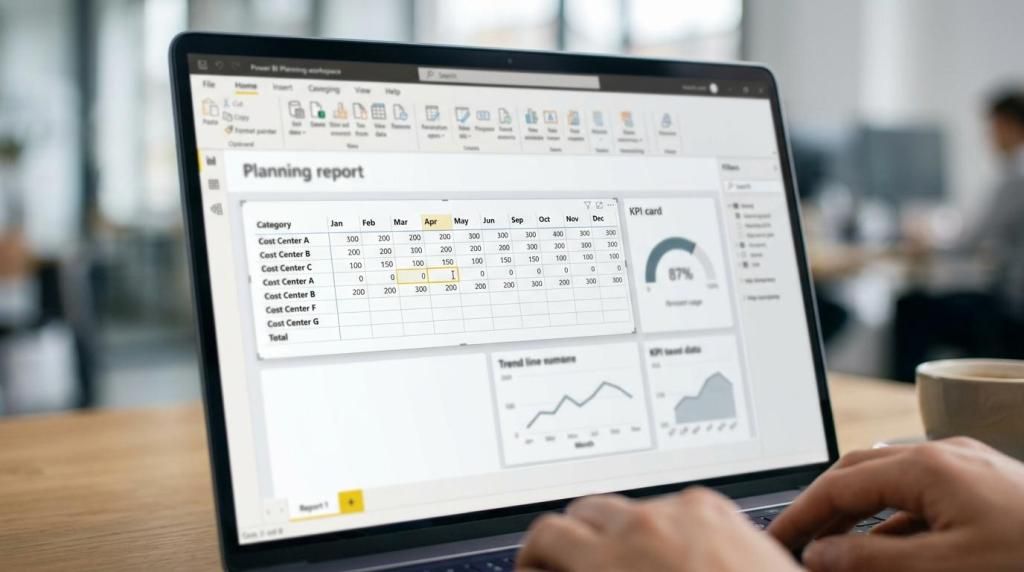
"accoTOOL supports planning, forecasting, budgeting, commenting, and master data management inside Microsoft Power BI."
If your organization already runs operating reviews in Power BI, this matters. A common mistake is treating employee performance and business performance as separate processes when they often need the same evidence trail.
Why do so many organizations fail to trust their performance management process?
Trust breaks when reviews feel subjective and disconnected from daily work. Deloitte reports 61% of managers and 72% of workers could not say they trust their organization’s performance management process.
Those numbers are a warning sign, not a software verdict. The problem is usually process design plus weak evidence. Deloitte also notes that fewer than one in three workers surveyed by Betterworks think performance reviews are very fair and equitable. Only 6% of organizations surveyed said they are doing great things using data and evidence to capture worker value while improving trust.
Three causes show up again and again. Goals are too vague to judge fairly. Feedback arrives too late to change outcomes. Data sits in silos, so managers rely on memory and perception instead of documented facts.
If then logic helps here. If goals are static and business conditions change, then ratings will feel arbitrary. If managers cannot see project results, customer outcomes, and prior feedback together, then consistency drops. If employees cannot trace how feedback connects to decisions, then trust erodes even when the process is technically compliant.
Pro tip: fairness is not only a calibration meeting issue. It starts with clearer goals, cleaner evidence, and visible decision rules.
What are the top performance management software options by use case?
The best performance management software depends on your operating model, not a universal ranking. Workday, Betterworks, Lattice, and Power BI based options like accoTOOL solve different parts of the performance equation.
A useful shortlist starts with the workflow you need to fix first. Some platforms are strongest in HR-led reviews and talent cycles. Others are better for manager coaching, OKRs, or operating performance tied to budgets and KPIs.
- accoTOOL: Best fit for Microsoft Power BI environments that need operating performance workflows, writeback, commentary, planning, and direct SQL Server updates inside the reporting layer.
- Workday: Best fit for large enterprises that want performance management tightly connected to core HCM records, compensation, and talent processes.
- SAP SuccessFactors: Best fit for global organizations with complex HR governance, formal review structures, and broader talent suite requirements.
- Betterworks: Best fit for organizations centered on goals, continuous feedback, and manager employee check-ins across distributed teams.
- Lattice: Best fit for companies that want a modern employee experience with feedback, engagement, and career conversations in one place.
- 15Five: Best fit for teams emphasizing manager coaching, weekly check-ins, and people manager effectiveness.
This is not a universal top six. It is a fit map. If your main issue is review administration, start with HCM-native tools. If your main issue is execution discipline across finance, operations, and people teams, a Power BI-centric workflow layer can be the stronger choice.
How should you evaluate performance management software step by step?
A disciplined software evaluation starts with process fit, then data, then rollout risk. Microsoft Entra ID, audit logs, and manager workflow matter as much as review templates.
Start with the decision you need the software to support. Are you fixing annual reviews, ongoing coaching, goal visibility, bonus calibration, or operating accountability? Buyers often skip this step and compare feature grids too early. That produces attractive demos and weak adoption.
Next, map the workflow by role. Employees need simple status updates and feedback capture. Managers need evidence, check-in prompts, and team views. HR needs governance and reporting. Finance or operations may need performance commentary tied to targets, forecasts, and operational KPIs.
Then validate data flow and control. A performance system that cannot connect to your HRIS, BI layer, or identity provider will create duplicate work. If sensitive comments or ratings are involved, role-based access control, audit trails, encryption, and export governance are baseline requirements.
"accoPLANNING lets users enter, edit, and update data directly in a Power BI visual while writing back to SQL Server on-premise or Azure."
Use a short scorecard so the evaluation stays grounded:
- Process fit: Reviews, check-ins, goal tracking, calibration, and manager workflow
- Data architecture: HRIS integration, API access, BI compatibility, writeback needs
- Security: SSO, permissions, audit logs, and data residency expectations
- Adoption risk: Training load, mobile access, UI clarity, manager time required
- Reporting quality: Fairness signals, completion rates, goal progress, and evidence traceability
A common misconception is that more features mean more maturity. In practice, fewer steps and cleaner evidence usually outperform feature-heavy systems.
How does performance management software compare with HRIS and HCM suites?
HRIS and HCM suites like Workday or SAP SuccessFactors are systems of record first. Dedicated performance management software is usually better at feedback cadence, goal tracking, and coaching workflows.
The trade-off is control versus specialization. HCM suites give you one vendor, one employee record, and tighter links to compensation, job architecture, and succession planning. That can reduce integration risk. It can also slow configuration changes if line managers want a lighter, more frequent performance rhythm.
Specialist platforms usually feel faster for managers and employees. They often make goal progress, one-on-ones, and real-time feedback easier. The downside is architectural sprawl if HR data, review data, and business metrics never truly meet.
Use this rule of thumb. If HR owns the process and formal review governance is the main requirement, start with your HCM stack. If manager behavior and team execution are the weak point, specialist tools often move faster.
How is performance management software different from BI, planning, and workflow tools?
BI and planning tools like Power BI or Anaplan do not replace performance management software, but they can complete it. They tie goals and reviews to actual operating metrics, budgets, and corrective actions.
This distinction is important for finance and operations leaders. A review platform can show whether a goal is marked green, yellow, or red. A BI or planning workflow can show why it moved, what assumption changed, and what action should happen next.
That is where adjacent tools become powerful. accoTOOL’s Power BI writeback model, for example, is not an HR review suite. It is better viewed as execution infrastructure for planning, commentary, and master data workflows that sit near performance management. If team goals are tied to budget owners, sales targets, production plans, or service levels, those connections matter.
"accoTOOL uses Power BI with writeback, commenting, and master data workflows to support planning and operational follow-through."
Pro tip: do not force one platform to do every job. If employee feedback belongs in a people system and target correction belongs in Power BI, connect the workflows instead of flattening them.
How do you implement performance management software without hurting manager adoption?
Manager adoption rises when implementation starts small and stays inside familiar tools like Microsoft Teams or Power BI. Process discipline beats a big bang rollout almost every time.
First, pilot one recurring workflow that managers already feel. Quarterly goal check-ins, sales performance commentary, or a midyear review cycle are good candidates. The pilot should remove work, not add work. If the first release increases clicks or duplicates notes, adoption will stall.
Next, lock down governance early. Decide who can edit goals, who can see comments, when ratings are allowed, and which data sources count as evidence. This is where many projects get messy. People confuse visibility with transparency, yet open access without role logic can reduce trust.
Then coach managers on judgment, not just software steps. The system can prompt better behavior, but it cannot replace manager quality. Short training on expectation setting, evidence capture, and feedback timing often matters more than deep feature training.
"accoTOOL names SwissLife, Dantherm, Vitrolife, Odfjell Technology, AJVaccines, and Aalborg Forsyning among its customers."
A practical misconception is that adoption depends mostly on user interface. It also depends on whether the system fits existing meetings, existing reports, and existing decisions.
How do you connect goals, feedback, and business outcomes in one workflow?
Goal linkage works when finance, operations, and people data share the same logic. Power BI, SQL Server, and modern performance tools can connect target setting, commentary, and outcome tracking.
Step one is to define outcomes at the business level. Revenue retention, cycle time, service quality, project margin, and compliance targets are better anchors than generic statements like “show leadership.” You can still keep behavioral competencies, but they should sit beside measurable results.
Step two is to translate those outcomes into team and role expectations. If a customer success team owns renewal risk, then goals should include both activity and result measures. If a plant manager owns throughput and safety, then performance evidence should reflect both. This keeps feedback grounded.
Step three is to close the loop with commentary and corrective action. When a goal slips, the system should prompt context, owner updates, and, where needed, planning changes. That is where workflow tools near Power BI can help because they keep commentary, targets, and updated numbers close together.
The payoff is not just cleaner reviews. It is faster intervention. If goals, comments, and business data meet in one loop, leaders can act before the review cycle is over.
Which metrics show whether performance management software is working?
The right success metrics combine sentiment, process quality, and business execution. Deloitte’s trust data shows that participation alone is not enough if employees still doubt fairness or usefulness.
Start with trust and perceived fairness. If completion rates are high but employees still see the process as arbitrary, the software is not solving the real problem. Pulse surveys, calibration variance, and appeal or dispute patterns can reveal this quickly.
Then track manager behavior. Look at check-in frequency, feedback timeliness, goal update cadence, and how often evidence is attached before a rating or decision. These measures show whether the workflow is becoming part of management practice.
Finally, measure operating impact where the process connects to execution:
- Cycle quality: on-time reviews, goal freshness, documented feedback before ratings
- Decision quality: lower calibration rework, cleaner compensation inputs, fewer disputes
- Execution signals: faster plan corrections, clearer ownership, and better commentary on KPI changes
If your environment uses Power BI for operating reviews, add one more test. Can leaders move from a missed goal to the underlying metric, manager note, and corrective action without switching systems repeatedly? If yes, the software is supporting performance, not just recording it.